
November 2026
The First Four Months
When I started at the Selma Temple in June, one of my first priorities was to listen. I wanted to understand Mishkan's history, understand Selma, learn what work had already been done, and meet the people who care about this community. I spent a lot of time reading old plans and assessments, meeting with community leaders, preservationists, historians, clergy, and tourism professionals, and getting a clearer picture of both the challenges and what is possible.
Four months later, a lot has changed.
Some of the work has been behind the scenes: organizing records, building our database, strengthening technology, and putting basic systems in place. But in the last few weeks, that work is producing things people can see: new partnerships, grant funding, preservation work, oral histories, tourism research, educational opportunities, marketing materials, and new ideas for bringing people into Mishkan.
Preserving Our Story
I quickly realized that saving the building is only part of the work. We also need to preserve the stories of the people who lived Jewish lives in Selma. That led to Preserving Our Story: The Selma Jewish Heritage Project. Historian Dr. Melissa Young is conducting historical research and interviews, and we also developed internships in oral history and collections assessment and documentation.
I have also been working to organize the historical records we already have. We are taking a thoughtful approach to collections: documenting and digitizing what we can, preserving what matters, and looking at relationships with appropriate archival and museum partners rather than trying to turn Mishkan into a museum repository.
From the archives
One really cool piece of history that I've dug up through conversations with historians of Selma is the letter Muriel and Arthur Lewis wrote to friends and family appealing to moderates in Selma to speak up in support of integration.
Protecting the Building
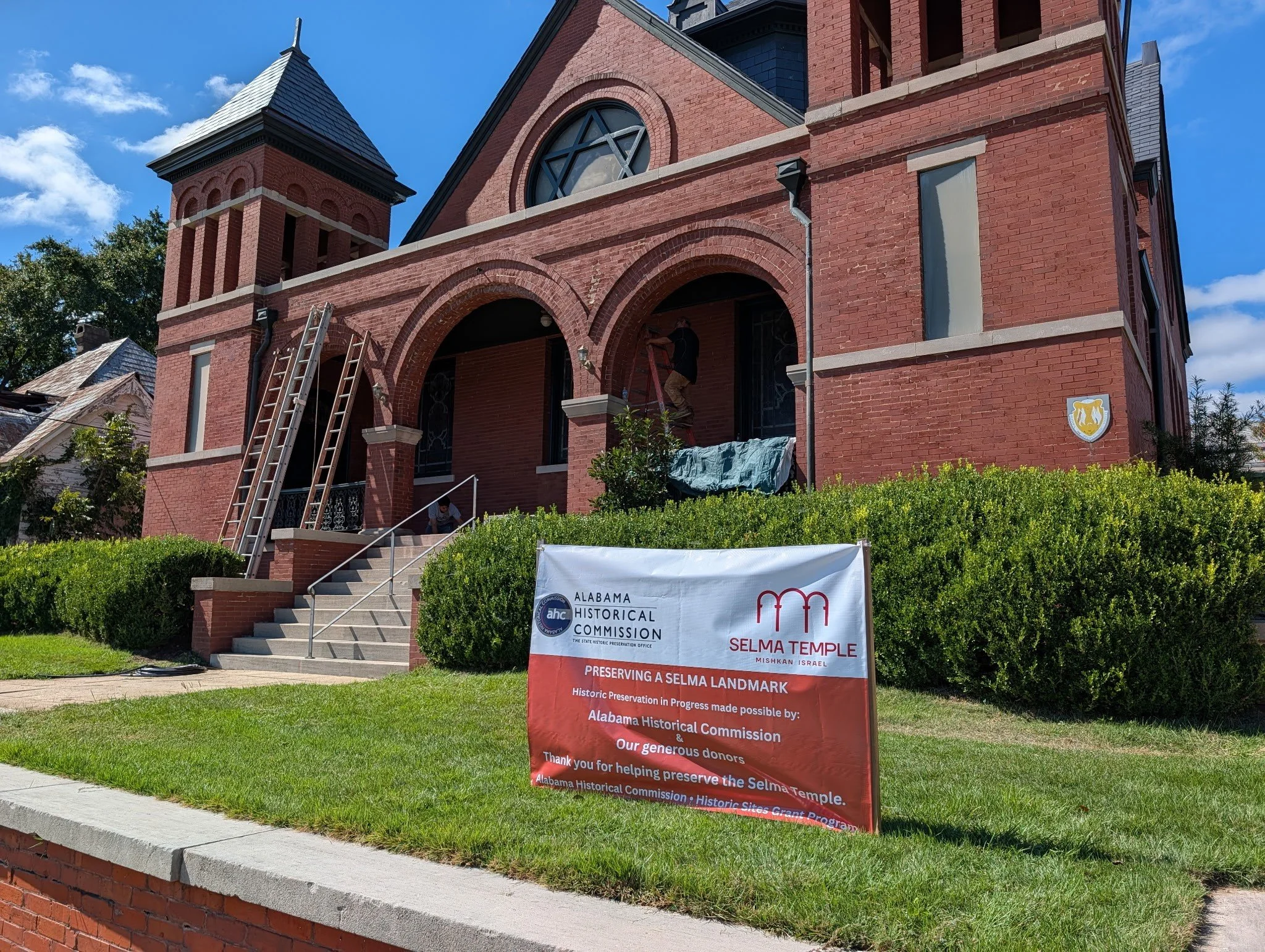
Preservation work at Mishkan Israel
We received a $75,000 Alabama Historical Commission Education Trust Fund grant for building repairs, an important investment in the preservation of the synagogue. The exterior of the synagogue building has been cleaned, and brick and masonry are being repaired.
We also submitted a couple of security grant applications in recent weeks. If funded, the Selma Temple will be able to make significant investments in security to protect the historic property and the people who visit it.
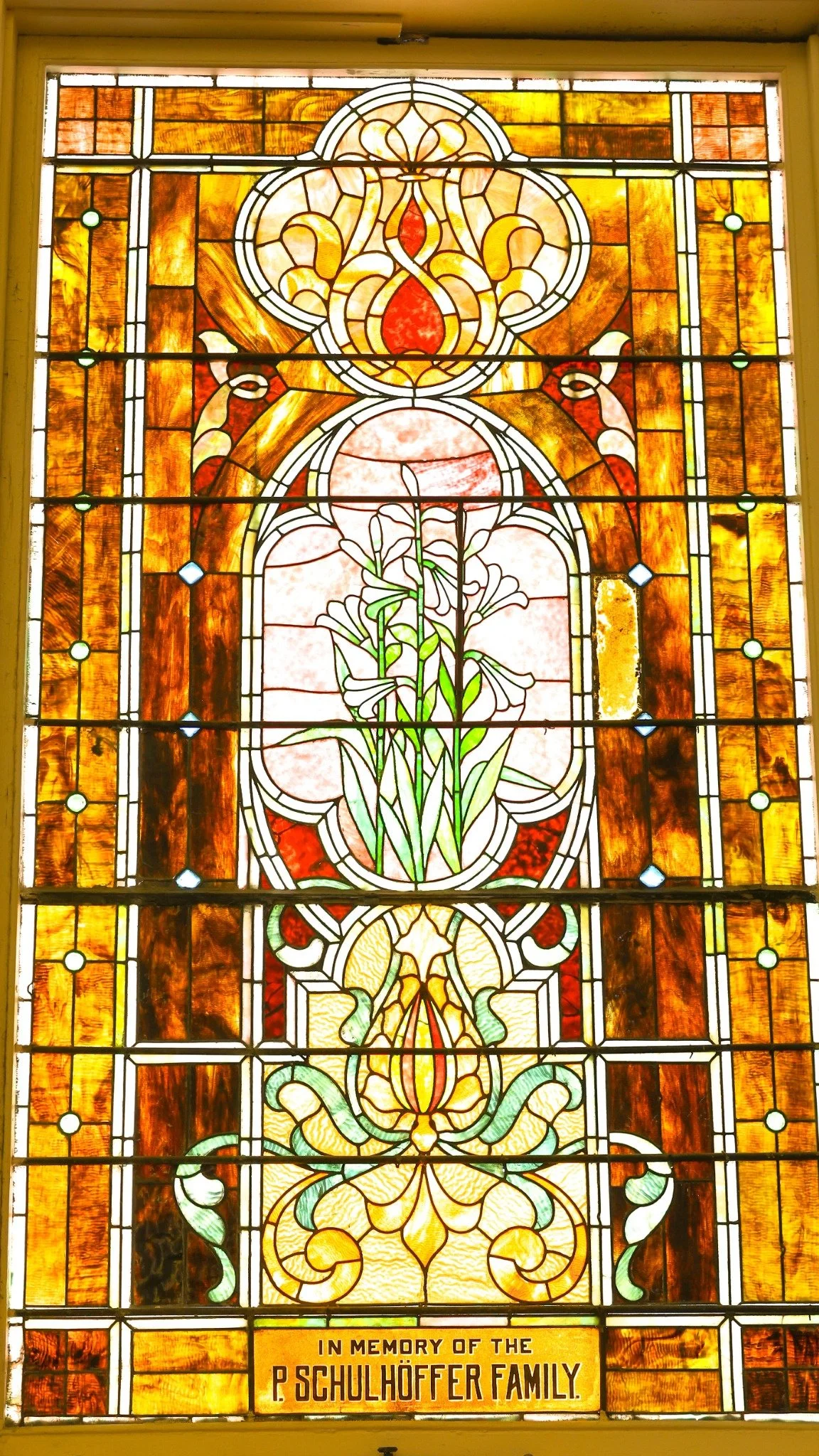
The stained-glass windows are another major priority. A detailed assessment by specialists documented the condition of the windows. The work to preserve them will be significant, but it creates a unique naming opportunity for the right supporters - perhaps even the families who dedicated the original windows.
Historic stained-glass at Mishkan Israel
Building a Heritage Tourism Initiative With Selma
One of the biggest ideas to take shape is a Heritage Tourism Capacity Building Initiative. This started with a simple question: What would it take for Selma to be better prepared for people who want to come here because of its history?
The answer isn't just more visitors. Selma has an extraordinary collection of historic, cultural, religious and civil rights sites. The challenge is building the capacity to connect those places, tell their stories, welcome visitors, coordinate tourism, and make sure the benefits reach the community.
I developed a survey for local cultural and heritage organizations to understand where things stand now and where there might be opportunities for collaboration. The next step will be to bring Selma’s heritage and tourism stakeholders together, look at what can be learned from the survey, and start identifying practical things we can do together.
Making Mishkan More Visible
The Alabama Historical Commission's announcement of our $75,000 grant generated a very positive response. And a piece I wrote about the Selma Temple appeared in the Southern Jewish Historical Society's Rambler, giving us another opportunity to reach people interested in Southern Jewish history and preservation. You can read that here on page 7.
Community
We are also beginning to think about the possibilities for Mishkan as a place for learning and gathering. There are many directions this could take, from conversations with authors and historians to music and art, tours, interfaith gatherings and educational programs. We are still figuring out what makes sense, what people want, and what we can do well.
SAVE THE DATE: Community Shabbat
January 8, 2027
The Selma Temple looks forward to opening the doors, bringing people together, and sharing a little of what we have to offer.
You are invited! Please join us!
Come be part of it.
Looking back at these first four months, the biggest change is that The Selma Temple is no longer just a building with a long history and a long list of things that need to be done. We are beginning to have the people, partnerships, projects, and resources to do something meaningful with that history. And we are starting to figure out what Mishkan can be for Selma. That feels like a pretty good place to be four months in.
If you haven't been to Temple Mishkan Israel lately, or have never been inside, we'd love to see you. Come visit, learn more about the history of Mishkan and the work underway, and see what we're building together.
And if you believe this history is worth preserving and this place has an important future in Selma, please consider supporting the work with a donation. Every contribution helps us preserve the building, preserve the stories, and make The Selma Temple a place where people can gather, learn, and connect.